Last updated
Introduction
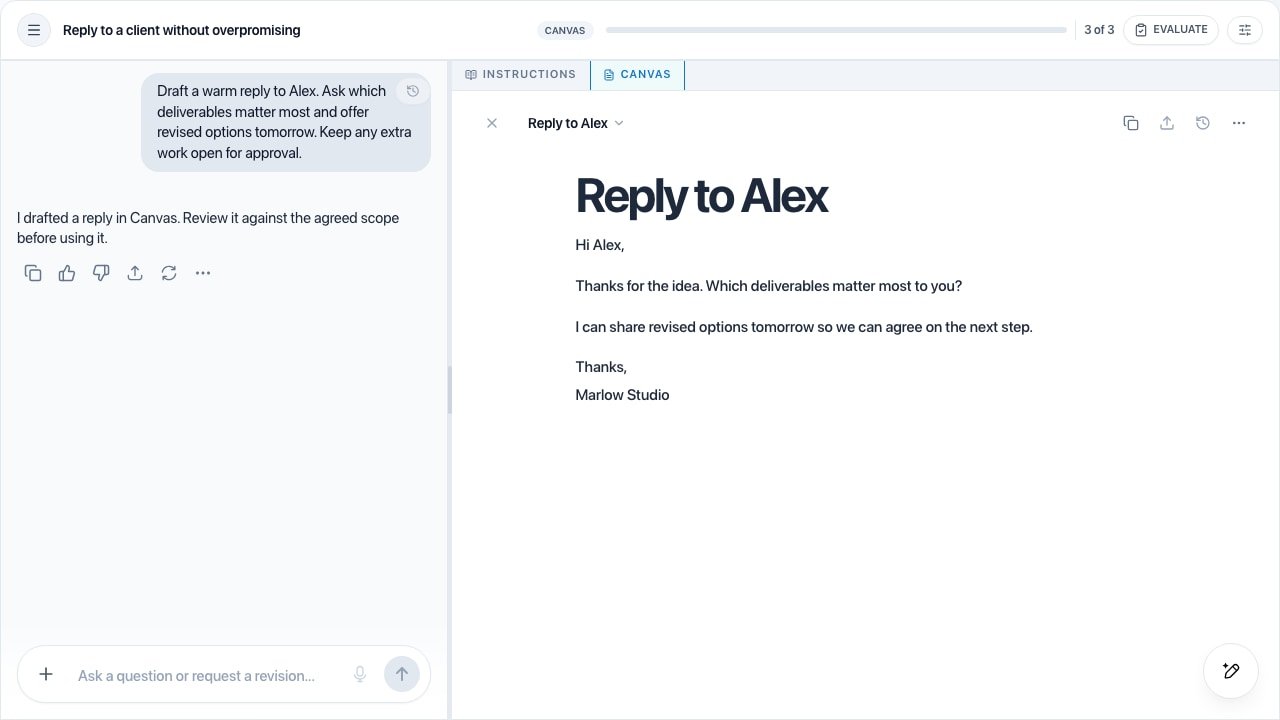
Discentik is an AI learning and assessment platform that I founded and build. It started in September 2025 as my final-year project at Queen's University Belfast, graded 77, and has grown into a product for learners, instructors and organisations at discentik.com. Instead of a generic chat box, it teaches practical AI skills through guided courses: people read short guidance, practise with AI in chat and document exercises, and get feedback on their work.
The Goal
Most AI training is theoretical and forgettable. The aim is a platform where people actually do the work, practising with AI on realistic tasks, while instructors build courses and organisations assign them to their teams and follow progress.
Technologies
Discentik runs a Next.js platform for accounts, the catalogue, workspaces and course authoring, plus a separate React course player for learners. Supabase and PostgreSQL handle authentication, data, storage and access rules, and AI calls run on the server through Supabase Edge Functions. Both apps are deployed on Cloudflare Workers.




Key Features
For learners
- ›Guided courses with lessons, quizzes, videos, chat exercises and document tasks in a writing canvas.
- ›Automated AI feedback on each answer against the requirements set by the course author.
- ›Deep Research activities that use web search to build a structured answer with sources to review.
- ›Completion certificates on eligible courses, and direct messages with the course instructor.
For instructors
- ›A course builder for stages, guidance, prompts and evaluation criteria, with a preview that never touches learner progress.
- ›An AI course assistant that researches and proposes activities for the instructor to review.
- ›Course pricing, sales and an earnings dashboard with CSV export.
For organisations
- ›Workspaces with roles and groups, course seats bought for the team and assigned to learners.
- ›Deadlines, progress and assessment reporting to see who needs support.
Payments and payouts
- ›Stripe Checkout for paid courses, with access granted only after a signed Stripe webhook confirms payment, including delayed payments, expiries and refunds.
- ›Instructor payouts through Stripe-hosted accounts: a private earnings ledger records each sale and earnings are transferred monthly.
- ›Each course includes an AI balance; every AI request reserves credits first and settles the actual usage afterwards.
Security
- ›AI requests run on the server with short-lived session tokens, rate limits and bot protection.
- ›The course player runs in a sandboxed, separate origin, and course content is protected with database-level access rules.
Course purchases and instructor payouts are built and tested, and will be switched on once paid courses launch.
Inside the product
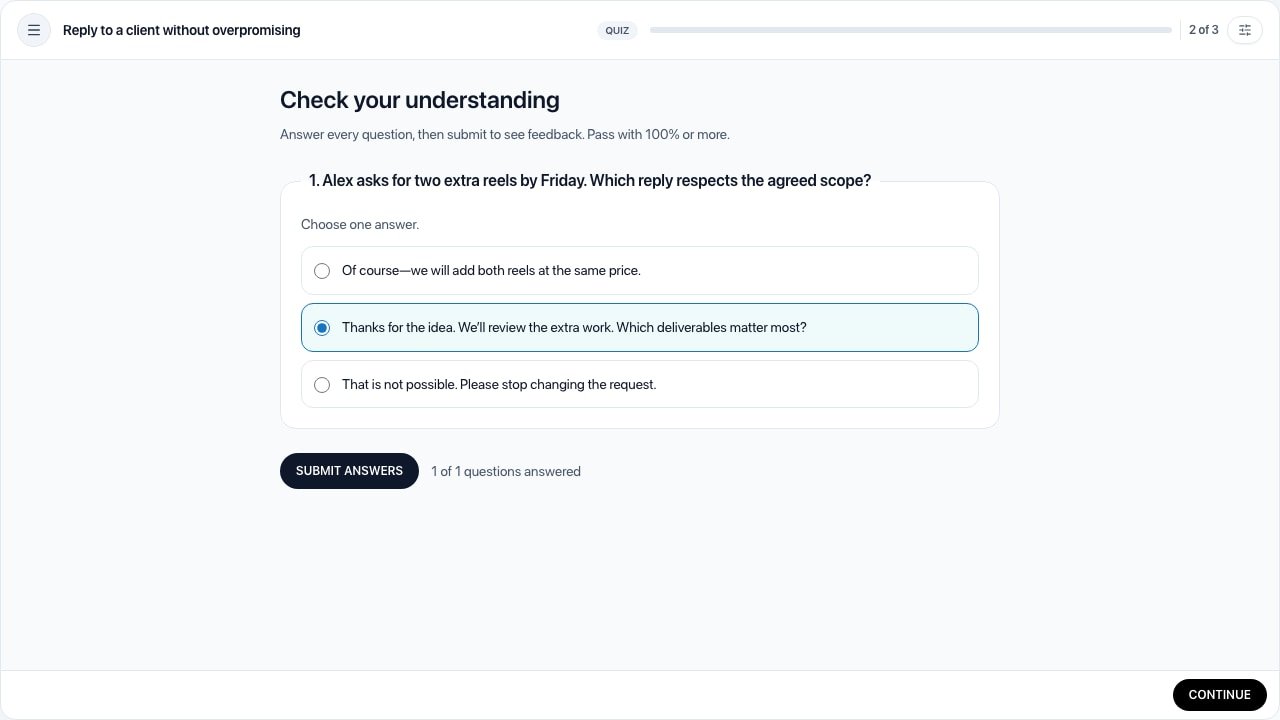
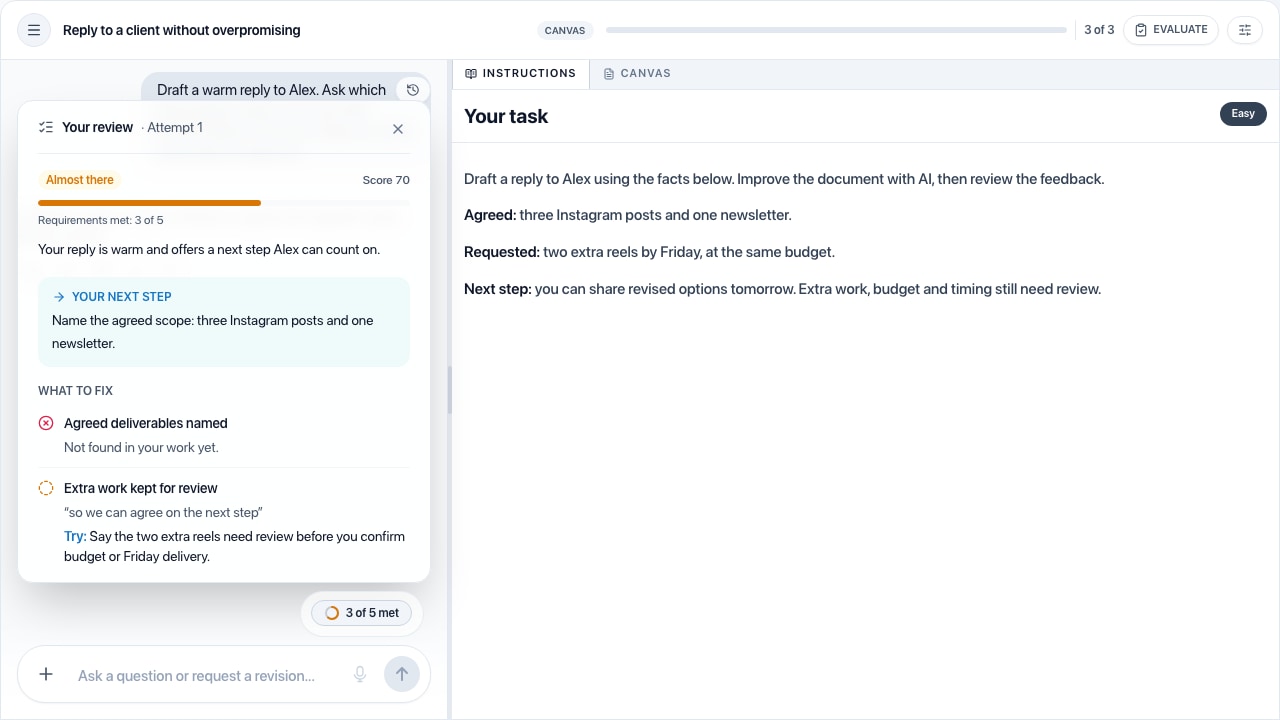
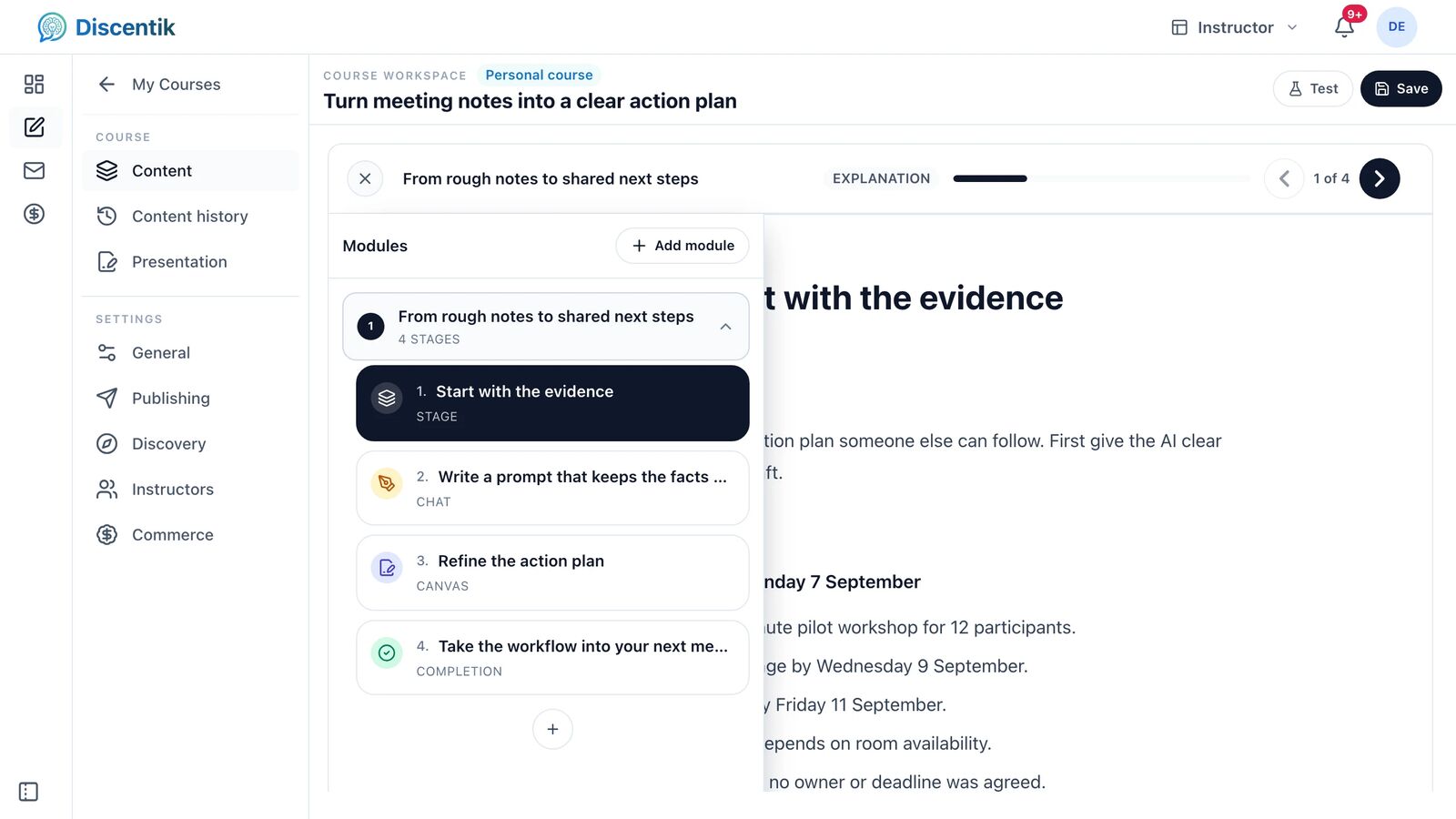

Learn: a short quiz checks the learner understands the task before practising
Screens from the current product, shown with a prepared demo course.
How I build it
I build Discentik with AI coding tools such as Claude Code, Codex and GitHub Copilot. They speed up the routine work, while I make the architecture decisions, review every change and rely on automated tests to keep quality high. I work the same way for clients: faster delivery, with an engineer accountable for the result.
Where it is now
Registration is open to people aged 16 and over in Ireland, Spain, the United States and Australia, with a waitlist for other countries. I keep developing it alongside my client work.
See how I can help →Thank you for reading,
Julio Macias Gonzalez